
Adjustments and Your Brain
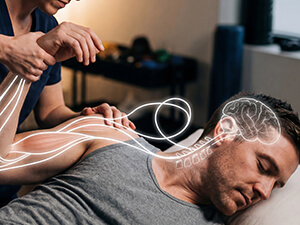 New research published in Frontiers in Neurology reveals once again that adjustments help with much more than back pain. Spinal manipulation has been proven to produce measurable changes in brain activity, including in regions that process pain, mood, and awareness.
Researchers found that these brain-level shifts were tied not only to reduced pain, but also better physical function and more stable emotional states. The prefrontal cortex (which is involved in decision-making and emotional regulation) was among the areas most noticeably affected.
This doesn’t mean chiropractic is a treatment for mental health conditions, but it does show that adjustments have further reaching outcomes than you may think. We’re not just moving bones. We’re strengthening your nervous system in ways science is only beginning to fully map.
Try Chiropractic Before Surgery for Neck Pain
 If you’ve been told that neck pain or arm pain from a pinched nerve might require surgery, you’re not alone in feeling uncertain about that path. A major 2026 systematic review of more than 1,100 patients found no significant long-term differences between surgery and conservative care for neck pain, arm pain, disability, or overall treatment success.
This is an important finding, proving that for many people, the outcomes from non-surgical care (including chiropractic) are comparable to surgical outcomes – without the recovery time, risk, or cost. Conservative care works, and the evidence is continuing to build in its favor.
If you’re managing ongoing neck and arm pain, we encourage you to explore all your options before committing to an invasive procedure. We’re glad to work with your healthcare team to help you find the approach that makes the most sense for your situation.
When Your Heel Hurts, Check Your Spine
 Plantar fasciitis is a common condition causing sharp heel pain, often felt most with your first steps in the morning. It’s usually treated as a foot problem, but the foot is rarely where the story begins. A 2026 review confirmed that managing plantar fasciitis effectively often requires addressing the whole kinetic chain, not just the site of pain.
When your spine or pelvis is out of alignment, the way you walk and bear weight shifts. One foot ends up absorbing more impact than it should. Over time, that uneven load strains the plantar fascia, a band of tissue running across the bottom of your foot, until it becomes inflamed and painful.
Restoring proper spinal and pelvic alignment takes that excess load off your feet and allows the tissue to heal. If you’ve been dealing with heel pain that isn’t responding to stretches or shoe inserts, the answer may be further up than you’d expect. We’re happy to take a closer look.